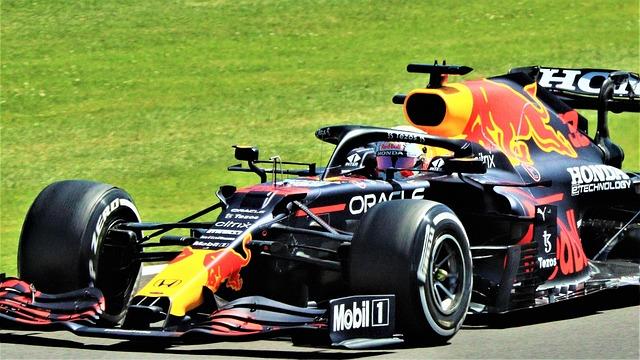
In the wake of a challenging practice session at the United States Grand Prix, formula 1 champion Max Verstappen has pinpointed a crucial setup issue affecting his Red Bull Racing car. As teams gear up for another thrilling weekend at the Circuit of the Americas, the Dutch driver’s candid assessment underscores the complexities of fine-tuning performance in a highly competitive environment. With the stakes high, Verstappen’s insights could pave the way for strategic adjustments as Red Bull seeks to reclaim its dominance on the track. this article delves into Verstappen’s observations, the implications for the team, and what fans might expect as the weekend unfolds.
Verstappen Uncovers Key Setup Flaws Ahead of United States Grand Prix
Max Verstappen has shed light on crucial setup issues encountered by Red Bull Racing following the practice sessions leading up to the United States Grand Prix. The Dutch driver revealed that despite the team’s strong performance in previous races, certain aspects of their car’s configuration are not optimized for the specific demands of the Circuit of the Americas. This realization is pivotal, as it could play a important role in their competitiveness over the weekend.
The identified setup flaws include:
- Suspension Tuning: The current settings are not providing the necessary grip, particularly in the high-speed corners.
- Aerodynamic Balance: Adjustments are needed to achieve better downforce levels, especially in the second sector.
- Tire Management: The car’s behavior on tire degradation is inconsistent,which could affect race strategies.
In an effort to swiftly address these issues, the team has formulated a detailed plan to adjust the car’s setup ahead of qualifying. the adjustments will prioritize enhancing stability and grip, which are critical for a triumphant performance on race day. As Verstappen continues to push for improvements, many are eager to see how these changes will influence their chances of securing another victory at this iconic track.
Red Bull’s Performance Analysis Reveals Consistency Issues
After the recent round of practice at the United States Grand Prix, Max Verstappen provided keen insights into the setup issues plaguing red Bull Racing’s performance. despite their dominant form earlier in the season, the team’s car appeared to struggle with consistency, particularly in pace and tire wear. Verstappen highlighted the importance of fine-tuning the vehicle’s balance, revealing that small adjustments could be pivotal in regaining their competitive edge as the season progresses. The feedback raised eyebrows, considering Red Bull’s reputation for engineering excellence and trackside adaptations.
Analyzing the data collected during practice, Red Bull’s engineers are prioritizing the following areas for advancement:
- Suspension settings: Aiming for optimal grip in various track conditions.
- Tire management: Enhancing longevity and performance over longer race stints.
- Aerodynamic efficiency: Addressing drag factors that may hinder top speed on straights.
| Practice Session | Fastest Lap Time | Position |
|---|---|---|
| Session 1 | 1:34.202 | 1st |
| Session 2 | 1:35.410 | 3rd |
| Session 3 | 1:34.658 | 2nd |
Expert Recommendations for Optimizing Race Strategy and Car Balance
in the wake of Max Verstappen’s observations about the setup issues impacting Red Bull’s performance during the united States GP practice, several key strategies for optimizing race performance have emerged. Teams should prioritize a dynamic balance between aerodynamic efficiency and mechanical grip to navigate varying track conditions effectively.Additionally, employing advanced telemetry systems can aid in real-time data analysis, allowing engineers to make swift adjustments to tire pressures and suspension settings based on driver feedback. To enhance overall vehicle control,it is indeed crucial to focus on cornering stability,which can be achieved through meticulous setup changes.
Moreover, understanding the tire degradation patterns throughout the race will be essential for maximizing performance while minimizing pit stops. Teams are advised to engage in thorough pre-race simulations that assess different strategies under race-like conditions.when analyzing race data, consider utilizing a simple table to outline different tire strategies and their predicted outcomes:
| Tire Type | Expected Lifespan | Performance Level |
|---|---|---|
| Soft | 20-25 laps | High |
| Medium | 25-30 laps | Moderate |
| Hard | 30-35 laps | Low |
By incorporating these recommendations into practice sessions and adapting swiftly to feedback, teams can gain a significant competitive edge. Ultimately, a balanced car coupled with an adaptive race strategy will be pivotal for success in the ever-challenging landscape of Formula 1 racing.
The Way Forward
Max Verstappen’s identification of a setup issue during the United States Grand Prix practice reflects both his racing acumen and the challenges faced by Red Bull Racing as they strive for optimal performance. As the team analyzes the feedback from their star driver,they will undoubtedly work to rectify these concerns ahead of qualifying and the main event. With the championship title in sight, every adjustment becomes crucial as Verstappen seeks to maintain his competitive edge. As the weekend unfolds, fans and analysts alike will be watching closely to see how Red Bull responds and whether they can leverage Verstappen’s insights for a strong showing in Texas.