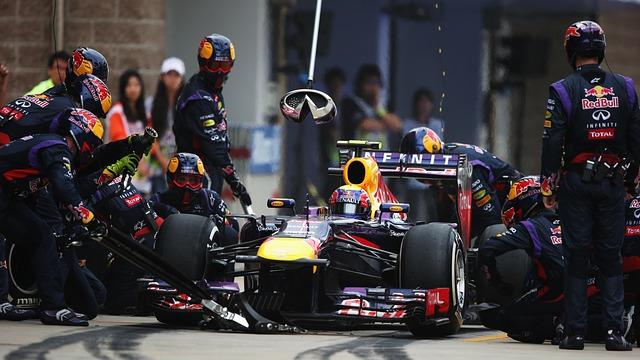
Diving into the Heritage of Formula 1: A Comprehensive Examination of the Championship’s legacy
With engines roaring and teams strategizing for victory, Formula 1 stands as a pinnacle in the world of motorsport, captivating millions across the globe. However, behind the thrilling speeds and intense rivalries lies a rich history that has molded this championship into its current form. What does “Formula 1” signify? What are its governing rules, and how did this esteemed racing series evolve from humble beginnings? This article delves into Formula 1’s illustrious past by exploring its origins, key milestones, and addressing twelve pivotal questions that unveil the story behind one of motorsport’s most revered championships. Join us as we traverse through the intricate evolution of Formula 1 too understand its position as a leader in competitive racing.
Decoding “Formula 1”: Understanding Its Name
The term “Formula 1” is derived from a specific set of regulations that govern the championship, creating a standardized framework for competition. The word “Formula” refers to these guidelines established in the mid-20th century to ensure fairness and consistency among competitors. The numeral “1” signifies it as the highest tier of single-seater motor racing, distinguishing it from other categories within motorsport. As an iconic series with roots dating back to the 1950s, Formula 1 was formalized by the Fédération Internationale de l’Automobile (FIA), which aimed to create an organized world championship for drivers amidst previously unregulated races throughout Europe.
While critically important transformations have occurred over time within F1’s landscape, its foundational principles remain closely tied to those original objectives. In recent decades, this championship has expanded globally-welcoming teams, drivers, and fans from every corner of our planet. Several essential elements have contributed to shaping its identity:
- Technical Standards: Defining requirements for vehicle design and performance.
- Pinnacle Racing series: Recognizing top-tier achievements in motorsport.
- Cultural Events: Featuring prestigious races at circuits like monaco and Silverstone.
Historical Milestones That shaped The Championship
The origins of this championship can be traced back to motor racing’s surge in popularity during the1920s strong > , culminating with establishing what became known as Europe’s first major motor racing event-the European Championship strong >in1930 . however ,it wasn’t until1950 strong >that modern-day Fomula One officially commenced ,marked bythe inaugural WorldChampionship race held at Silverstone . Subsequent developments included formingtheFédération Internationale de l’Automobile (FIA) strong >as governing bodyand introducing groundbreaking technologies like rear-engine cars revolutionizing both race strategiesand car designs throughout subsequent decades .
A multitudeof pivotal moments has influenced Fomula One throughoutits history reshaping regulationsand practices alike . Notable occurrences include implementingacost cap in2021 strong >to foster equitable competition alongsideenhanced safety protocols following tragic incidents involving Ayrton Sennaand Roland Ratzenbergerin1994 . Moreover ,the sporthas expandedits global presencewith races now taking placein diverse locations suchasSingapore , Abu Dhabi strong>,andMiam i strong>, reflectingits transformationfromEuropean originsintoan international spectacle .
| Date | Pivotal Event | |||||||||||||
|---|---|---|---|---|---|---|---|---|---|---|---|---|---|---|
| 1950 | The first World Championship Race Takes Place at Silverstone. | |||||||||||||
| 1966 Introduction Of Rear-engine Vehicles Dominates Racing Strategies td >
| 1994 Increased Safety Measures Implemented Following Accidents td >
< / tr > Factors Driving Evolution: FIA Regulations And Technological Advancements In Formula One
The realmof FormulOnehas experiencedremarkable transformations sinceits inception drivenby constantly evolvingregulationsalongsideinnovative technology.Initially characterizedby simplicityand raw powerwith minimalrestrictionsonvehicle designperformance,this environmentfosteredintensecompetition; though,a growingneedforstandardizationandsafetyemergedover time.Today stringentregulationsgovern everythingfromengine specifications toaerodynamic configurationsensuringfairnesswhile prioritizingdriver safety whilst facilitatingtechnologicaladvancements. As teams adaptto these shiftingrules,we witnessan extraordinarydisplayofengineering ingenuityleadingto hybridpower units’ introductionalongsideadvanced materials.Theimpactof technologyonperformanceis undeniable;teamsnow leveragecomplexdata analyticsandsimulationtools pushingboundariesof speedandefficiency.Key aspects include:
|