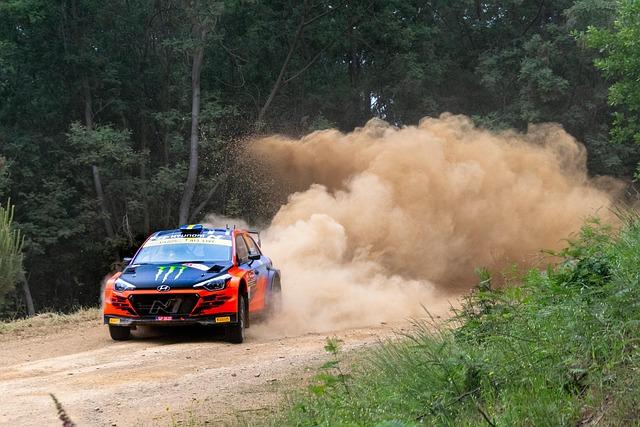
Unveiling the Excitement of Rally Racing – An In-Depth Overview
In the world of motorsports, few experiences rival the thrill adn intensity found in rally racing. This dynamic sport combines speed, accuracy, and strategic navigation across diverse terrains, from twisting gravel roads to rugged dirt trails. What distinguishes rally racing is not just the high-performance vehicles but also the essential teamwork between driver and co-driver; their ability to make split-second decisions can be pivotal for success. As interest in off-road motorsports continues to surge,an increasing number of fans are drawn to the electrifying essence of rally racing. This article delves into this captivating sport’s intricacies, tracing its historical roots, spotlighting leading vehicles on the circuit, and showcasing how challenging dirt tracks test both drivers and their machines. Whether you’re a seasoned enthusiast or new to this exhilarating domain, join us as we explore rally racing from a fresh outlook.
Understanding the Fundamentals of Rally Racing
Rally racing is an adrenaline-pumping form of motorsport that fuses speed with collaboration against varied landscapes. Unlike traditional circuit races conducted on closed tracks where competitors race directly against each other in a controlled environment,rally racers face timed stages on public or private roads that can include everything from smooth asphalt to unpredictable gravel surfaces. The partnership between driver and co-driver is crucial; while navigating at high speeds through demanding conditions, co-drivers utilize pace notes that offer vital information about upcoming turns or obstacles-ensuring drivers stay prepared at all times. This collaboration underscores one unique aspect of rally racing: fast decision-making coupled with unwavering trust is as vital as technical driving skills.
A key element for successful rally driving lies in adapting techniques based on various terrains encountered during each stage. Drivers must modify their approaches depending on surface types which can range widely-from loose gravel to muddy paths or icy roads. Here are some common surfaces encountered in rally competitions:
- Gravel: Typically offers good traction but might potentially be inconsistent.
- Tarmac: Provides excellent grip for higher speeds but necessitates careful tire management.
- Snow: Demands precise throttle control along with strategic use of specialized tires.
the capability to effectively manage a vehicle’s dynamics across these varying surfaces can significantly influence finishing positions within competitions. Rally cars are meticulously engineered for adaptability under different conditions featuring adjustable suspensions and robust all-wheel-drive systems designed for enhanced performance.
Below is an overview summarizing essential characteristics that define elite-level rally vehicles:
| Feature | Description | |
|---|---|---|
| Power-to-Weight Ratio | A combination of powerful engines paired with lightweight materials boosts agility. | |
| Tires | Specially crafted for various terrains ensuring optimal grip. | |
Mastering techniques for dirt Riding
If your goal is to excel at dirt riding within rallies, honing specific techniques becomes essential when traversing challenging landscapes. One foundational skill involves riders must learn how to shift their weight appropriately: leaning forward during steep descents while shifting back during climbs helps maintain balance effectively.
Additionally,< strong > maintaining a relaxed grip on handlebars enhances control allowing better maneuverability over loose terrain like dirt or gravel.
Understanding proper using both front and rear brakes correctly prevents skidding while maintaining traction especially when cornering becomes necessary.
Another critical component involves mastering cornering techniques; riders should practice moving from inside-outside-inside during turns which aids in maintaining speed without sacrificing control.
engaging core muscles while leaning into corners increases stability reducing tipping risks considerably.
Familiarity with various surface types greatly impacts handling capabilities too-here’s a simple comparison chart outlining common terrain types every aspiring rider should consider:
| Terrain Type th > | Characteristics th > | Riding Tip th > / tr > /thead >
|
|---|---|---|
| Dirt td >< td >Loose & uneven< / td >< td >Maintain steady throttle< / td > tr > |